Noah Morris
Co-Founder

Can You Use AI-Generated Scripts On YouTube? (2026 Policies + Monetization Tips)
A lot of people are jumping into AI content right now because it’s fast and easy, but that’s also where the problem starts. Most creators don’t actually understand YouTube’s rules around AI, so they upload videos blindly, thinking everything is fine… until their videos get flagged, limited, or even demonetized. And the worst part is, they don’t even know what they did wrong. One small mistake can literally cost you everything.
The solution is simple, but most people ignore it: you need to understand YouTube’s policies around AI content and videos before you go all in. Once you know what’s allowed, what needs to be disclosed, and what actually gets monetized, everything becomes way easier. Instead of guessing and hoping for the best, you start creating content with confidence, knowing you’re playing by the rules while still taking full advantage of AI.
YouTube’s Official Policy On AI-Generated Content
YouTube doesn’t actually ban AI-generated content. What they care about is how you use it, not the fact that you use it. Their main rule is simple: your content must be original, useful, and not misleading. If you’re just mass-producing low-effort videos using AI with no real value, that’s where you run into problems. Especially if it feels spammy, repetitive, or like you’re trying to game the system. But if you’re using AI to help you create better content, like writing scripts faster or improving your ideas, you’re completely fine.
Another big thing YouTube focuses on is transparency and trust. If you use AI to create something that looks real but isn’t (like a fake voice of a real person or a deepfake), you’re expected to disclose that. They don’t want viewers to feel tricked. At the end of the day, YouTube rewards content that keeps people watching and helps them in some way. So AI is just a tool, it won’t get you banned, but abusing it definitely can.
What YouTube Says About AI Scripts And Videos?
YouTube doesn’t specifically say “AI scripts are bad” or “AI videos are not allowed.” In fact, they understand that creators use tools to speed things up. Writing scripts with AI, using AI voiceovers, or even generating visuals is totally fine as long as the final content feels human and engaging. Many creators now use specialized tools to write scripts with AI that help them structure their content better and save hours of work. The problem starts when people copy-paste AI output without editing it, which leads to boring, generic videos that nobody wants to watch.
They also care a lot about something called “reused content.” This means if your videos don’t add anything new like just reading information that already exists with no personality or insight you might not get monetized. So even if you use AI, you still need to add your own touch: your opinions, your style, your editing, your storytelling. That’s what separates creators who actually grow from those who get stuck.
How AI Content Is Different From Traditional Content?
The biggest difference is speed and effort. With AI, you can create a full script in minutes, while traditional content might take hours or even days. That sounds like a huge advantage, and it is. but it also creates a problem. Because it’s so easy, a lot of AI content ends up feeling the same. Same structure, same tone, same boring delivery. Traditional content usually feels more personal because someone actually spent time thinking through every part. Understanding AI versus traditional content creation helps you find the right balance between efficiency and authenticity in your videos.
Another difference is connection. Traditional content often builds a stronger bond with the audience because you can feel the creator behind it. the way they talk, their personality, their unique perspective. AI content can still do that, but only if you take the time to tweak it and make it yours. If you rely on AI 100%, people can feel that something is off. So the smartest creators don’t replace themselves with AI, they use it as a tool to move faster while still keeping their own voice in the content.
YouTube AI Disclosure Rule And What You Need To Label
YouTube introduced AI disclosure rules mainly to protect viewers from being misled. The idea is simple: if your content includes something that looks real but was actually created using AI, you need to label it. This includes things like AI-generated voices that imitate real people, deepfake videos, or visuals that make it seem like something happened when it didn’t. If your content is clearly just animation, gaming, or normal storytelling, you usually don’t need to worry about labeling it.
What you need to label is anything that could confuse someone into thinking it’s real. For example, if you make a video where a famous person appears to say something they never said, that must be disclosed. But if you’re just using AI to help write your script or generate ideas in the background, you don’t need to tell anyone. So the rule is not “label everything AI”, it’s “label anything that could trick people.”
When You Must Tell Viewers About AI Content?
You must tell viewers when your content crosses the line between obvious content and realistic content. If a viewer could watch your video and believe it’s real footage, a real voice, or a real situation, but it’s actually AI, then you need to disclose it. This is especially important for news-style videos, interviews, or anything involving real people.
On the other hand, if your content is clearly just a normal YouTube video, like commentary, education, gaming, or storytelling, then you usually don’t need to say anything. Most creators using AI for scripts or voiceovers don’t need to disclose it because it’s just part of the creation process. The key question to ask yourself is: “Would someone feel misled if they didn’t know this was AI?” If the answer is yes, you should label it.
How To Use The Synthetic Content Label On YouTube?
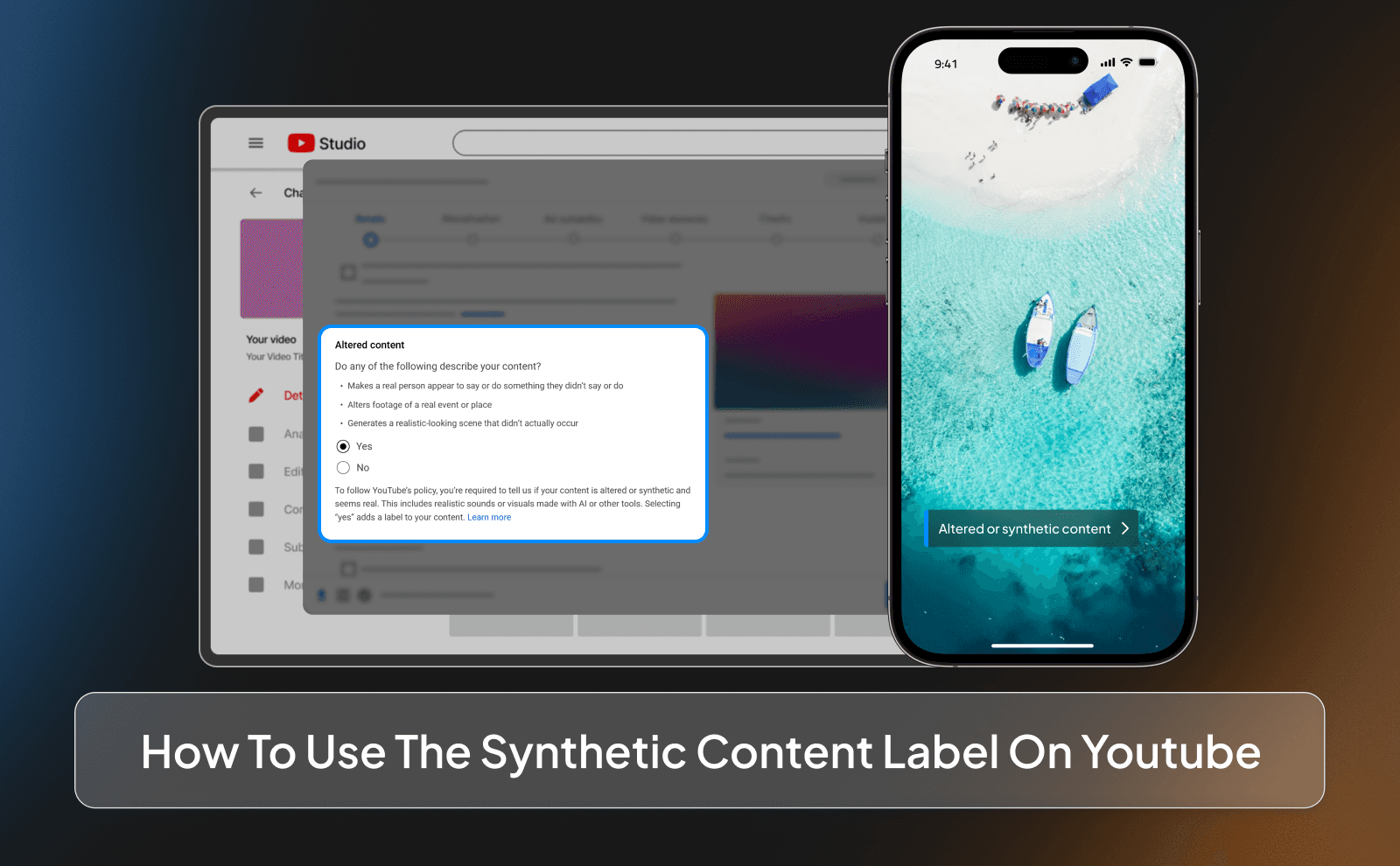
YouTube made it pretty simple to use the synthetic content label. When you upload your video, there’s an option where you can say if your content includes altered or synthetic media. You just check the box, and YouTube adds a small note to your video letting viewers know that some parts were created or modified using AI.
The goal here isn’t to punish you, it’s to build trust with your audience. Most people won’t even care if you used AI, as long as you’re honest about it. In fact, being transparent can actually help you build credibility. It shows you’re not trying to hide anything, and that makes people more likely to trust your content long term.
What Happens If You Don’t Disclose AI Content?
If you don’t disclose AI content when you’re supposed to, YouTube can take action. At first, it might be something small like limiting your video’s reach or removing certain features. But if you keep doing it, it can get more serious. your videos could get taken down, and your channel could get strikes.
The bigger issue is trust. If viewers feel like you’re tricking them, they won’t come back. And YouTube’s algorithm notices that. Even if you don’t get punished right away, your channel can slowly die because people stop watching. So it’s always better to be safe and honest rather than trying to get away with it.
Can You Monetize AI Generated Videos On YouTube?
Yes, you can absolutely monetize AI-generated videos on YouTube. There’s no rule that says AI content can’t make money. In fact, a lot of channels are already doing it successfully. But the important part is this: your content still needs to follow all the normal monetization rules. It has to be original, valuable, and not feel like spam.
If your videos look like they were made in 5 minutes with no effort, you’ll struggle to get monetized or keep monetization. But if you use AI to improve your workflow, while still adding your own ideas, editing, and personality, you’re in a great position. AI is a tool, not a shortcut to easy money.
YouTube Partner Program Rules For AI Content
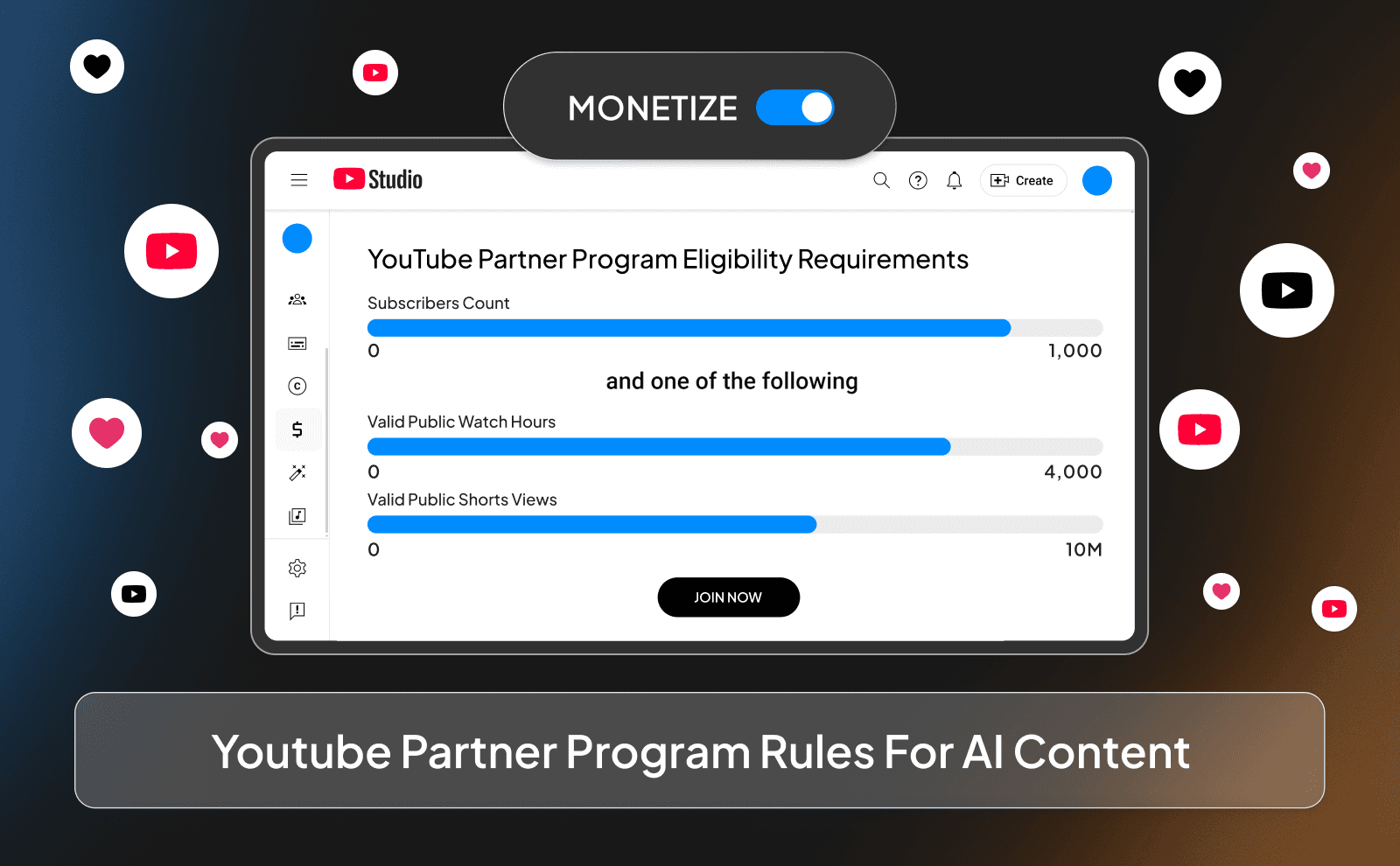
The YouTube Partner Program doesn’t have separate rules just for AI content. Everything falls under the same system. Your channel needs to have original content, follow community guidelines, and provide real value to viewers. AI doesn’t change those rules, it just changes how you create.
One important rule is avoiding “reused content.” This is where a lot of AI channels fail. If your videos are just repeating information with no unique angle, you might get rejected from monetization. So even if AI helps you write faster, you still need to bring something new to the table every time.
Types Of AI Videos That YouTube Will Monetize
YouTube will monetize AI videos that feel like real content, not mass-produced filler. For example, educational videos where you explain topics clearly, storytelling videos with good structure, or commentary videos where you add opinions, these all work well with AI. As long as the content is engaging and useful, you’re good.
Faceless channels using AI voiceovers can also do really well if they focus on quality. Clean editing, good pacing, and interesting topics make a big difference. YouTube doesn’t care if you show your face or not, they care if people watch your videos and enjoy them.
AI Content That Gets Flagged Or Demonetized
AI content usually gets flagged when it feels spammy or low effort. This includes things like auto-generated videos with no editing, robotic voiceovers that sound unnatural, or content that just copies other videos without adding anything new. These types of videos don’t provide value, so YouTube doesn’t want to promote or monetize them.
Another risky area is misleading content. If you use AI to create fake scenarios, fake news, or pretend something is real when it’s not, you can get demonetized quickly. YouTube is very strict about trust and accuracy, especially when it comes to sensitive topics.
YouTube Policy On AI Generated Content 2026 And What’s Allowed
As of 2026, YouTube’s policy is clear: AI-generated content is allowed, but it must follow the same rules as everything else. You can use AI for scripts, voiceovers, editing, and ideas. There’s no problem with that. What matters is the final result and how it affects viewers.
What’s allowed is content that is original, honest, and useful. If your videos help, entertain, or teach people, you’re in a safe zone. YouTube is not against AI, they actually expect creators to use new tools. They just don’t want those tools to be used in a lazy or harmful way.
Using AI As Your Creative Helper
The smartest way to use AI is as a helper, not a replacement. Think of it like this: AI can give you a first draft, ideas, or structure, but you’re the one who makes it good. An AI script generator can provide the foundation, but your editing and personal touch is what turns it into something viewers actually want to watch. You take what AI gives you and improve it, add your own thoughts, and make it sound natural.
When you do this, your content becomes both fast and high quality. You save time, but you don’t lose your voice. That’s the balance most successful creators find. They don’t rely on AI, they control it.
Content You Cannot Make With AI
There are certain types of content you should avoid making with AI. Anything that spreads false information, impersonates real people in a harmful way, or tries to trick viewers is risky. This includes fake interviews, fake news clips, or deepfake videos that could damage someone’s reputation.
You should also avoid content that breaks basic YouTube rules, like harmful or dangerous topics. AI doesn’t give you a free pass. If the content would be a problem without AI, it’s still a problem with AI. So always think about the impact of what you’re creating.
Can Faceless AI YouTube Channels Make Money?
Yes, faceless AI YouTube channels can definitely make money. There are many examples of channels making thousands every month without ever showing their face. The success of faceless channels proves that personality and quality matter more than appearance when building an audience. They use AI for scripts, voiceovers, and sometimes visuals, and focus on delivering good content consistently.
But the key is still quality and strategy. Just being faceless or using AI isn’t enough. You need good topics, strong titles, and engaging videos. When you combine AI tools with smart thinking, that’s when faceless channels really start to grow and make real money.
How To Make YouTube AI Content That Follows The Rules?
Using AI Voiceover YouTube Tools The Right Way
AI voiceovers are great, but they need to sound natural. If your voice sounds too robotic, people will click off your video quickly. So choose a good voice, adjust the speed, and make sure it matches the tone of your content.
You can also improve it by writing better scripts. Shorter sentences, simple words, and natural flow make a big difference. The voice itself matters, but the script is what really controls how it sounds in the end.
Adding Your Own Value To AI Generated Scripts
This is where most people fail. They take an AI script and use it as-is, which leads to boring content. Whether you use an AI script writer or any other tool, the key is always customization and adding your unique perspective to stand out. Instead, you should treat AI scripts like a rough draft. Add your own thoughts, examples, and opinions to make it better.
Even small changes can make a big difference. Change the wording, add a personal touch, or explain things in a simpler way. When you do this, your content feels unique, even if AI helped you create it.
Simple Tips For Making Better AI Videos YouTube
Start by focusing on one thing: making your video enjoyable to watch. Good editing, clean visuals, and clear audio go a long way. Combining multiple AI content creation tools in your workflow can help you produce professional-looking videos without expensive software or equipment. Even simple videos can perform well if they’re easy to follow and not boring.
Also, don’t rush to upload too many videos. It’s better to make fewer high-quality videos than spam a lot of low-quality ones. Take your time, improve each video, and learn what works. That’s how you actually grow.
Ways To Monetize AI YouTube Content And Make Money
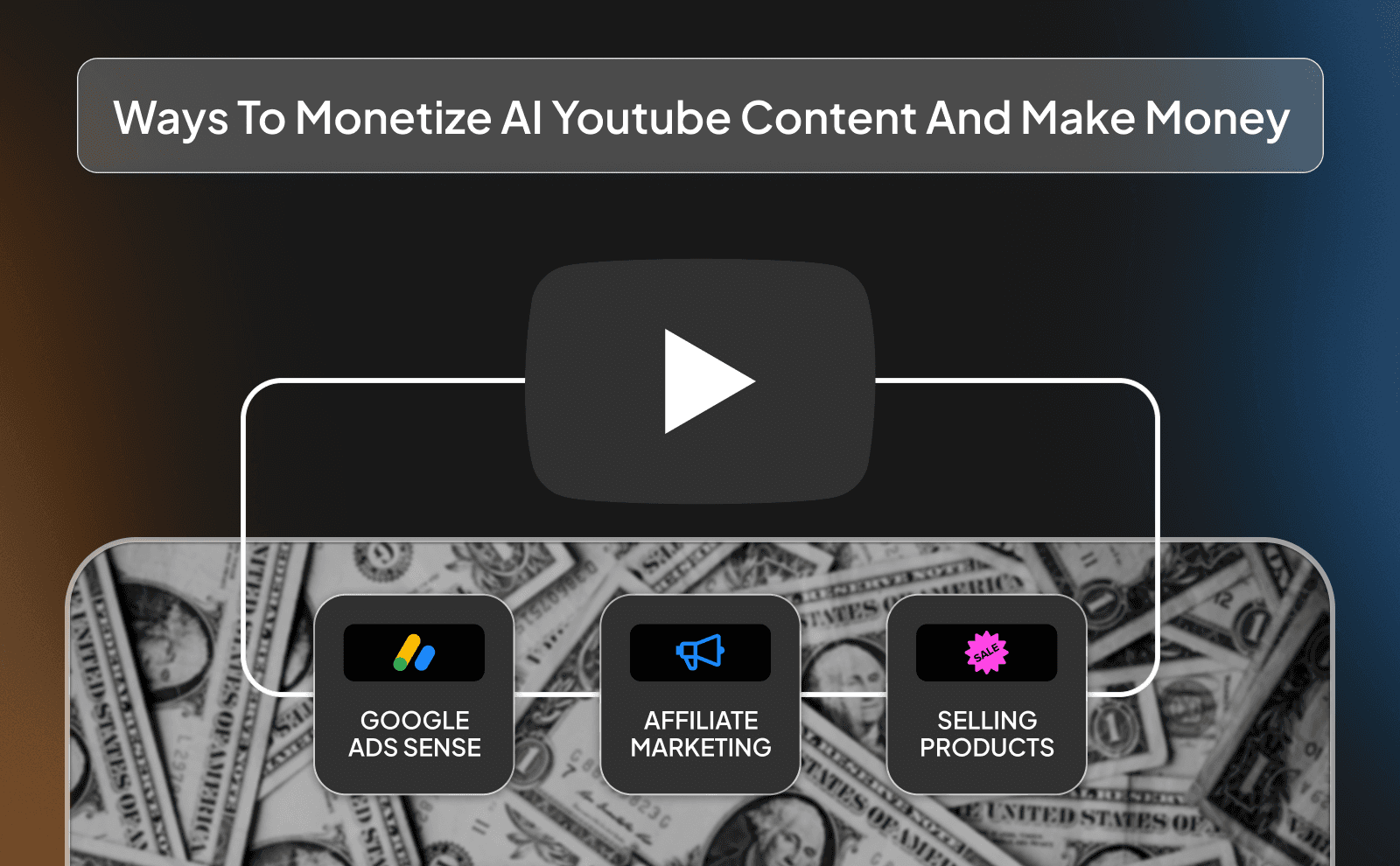
There are multiple ways to make money with AI YouTube content. The most common one is ads through the YouTube Partner Program, but that’s just the start. You can also use affiliate marketing, where you promote products and earn a commission.
Another option is selling your own products or services. For example, if you’re teaching something, you can sell a course or a guide. AI helps you create content faster, but the real money comes from how you use that content to build something bigger.
How To Build A Faceless AI YouTube Channel That Makes Money?

Start by choosing a niche that people are interested in and that has demand. Then use AI to help you research, write scripts, and speed up your workflow. Using the right AI tools for faceless videos can help you maintain consistent quality while scaling your content production effectively. Focus on making videos that solve problems or entertain people.
Consistency is also key. You don’t need to upload every day, but you need to stay consistent. Over time, your channel will grow, and once you start getting views, you can turn that into income through different methods.
Using AI Tools With Your Own Ideas
AI is powerful, but your ideas are what make your content unique. If you rely only on AI, your videos will look like everyone else’s. But if you combine AI with your own creativity, you stand out.
Use AI to support your ideas, not replace them. Think first, then use AI to help you execute faster. That’s how you stay ahead of most creators.
Making Money Beyond YouTube Ads
YouTube ads are great, but they shouldn’t be your only income source. You can make money through sponsorships, where brands pay you to promote their products. You can also use affiliate links to earn commissions.
Another powerful option is building something outside YouTube, like a community or a product. This gives you more control and more income. The smartest creators don’t rely on just one source, they build multiple streams.
Mistakes That Get AI Content Demonetized On YouTube
Copying AI Scripts Without Changing Them
Copy-pasting AI scripts is one of the fastest ways to fail on YouTube. These scripts are often generic and used by many people, so your content won’t stand out. It also increases the risk of being flagged for reused content.
Instead, always edit and improve the script. Add your own style, simplify the language, and make it more engaging. This small extra effort can completely change your results.
Making Too Many Low Quality AI Videos
It’s tempting to upload a lot of videos because AI makes it easy. But if those videos are low quality, they won’t get views. And worse, they can hurt your channel in the long run.
Focus on making each video as good as possible. Quality builds trust, and trust leads to growth. One good video is worth more than ten bad ones.
Not Following New YouTube AI Policy Changes
YouTube is always updating its rules, especially when it comes to AI. If you don’t keep up, you might accidentally break a rule without even knowing it. That can lead to demonetization or other problems.
So make it a habit to stay informed. Check updates, watch what other successful creators are doing, and adapt when needed. The platform rewards people who stay sharp and adjust over time.
Conclusion
At the end of the day, AI is just a tool, and like any tool, it depends on how you use it. YouTube is not against AI, but it is very strict about quality, honesty, and value. If you focus on helping people, keeping your content original, and not trying to trick viewers, you’ll be completely fine.
If you really understand the YouTube policy on AI content, you’ll realize it actually gives you a big advantage. You can move faster, create more, and still stay within the rules as long as you keep things real and valuable. So instead of worrying about AI getting you banned, focus on using it the smart way, and that’s where the real growth and money comes from.
FAQs
Does YouTube Monetize AI Scripts?
Yes, as long as the final content is original and adds value.
Can You Monetize AI Generated Videos On YouTube In 2026?
Yes, AI videos are fully monetizable if they follow YouTube rules.
What Is YouTube’s Policy On AI Generated Content?
AI content is allowed, but it must be original, honest, and not misleading.
How Do I Disclose AI Content On YouTube?
You use the synthetic content option when uploading your video.
Can I Use AI Voiceover On YouTube And Still Get Monetized?
Yes, just make sure its not a robotic voiceover and pick one that fits your niche.
Are Faceless AI YouTube Channels Allowed To Monetize?
Yes, many faceless channels that use AI make money if they provide value.
What Happens If I Don't Label Synthetic Content On YouTube?
Your video can get limited, removed, or even get strikes.
Can AI Generated Content YouTube Videos Go Viral?
Yes, if the content is interesting, unique, and well made.
Understand YouTube policy on AI content and how to monetize AI-generated videos while staying compliant with 2026 rules.