
Noah Morris
Co-Founder

How AI Writes High-Converting Scripts For Ads And Product Videos?
Many people who run ads face the same frustrating problem: they simply don’t know what to write. Staring at a blank page and trying to come up with a good ad script can take a lot of time and mental energy. You might know your product is great, but turning that into words that actually grab attention and convince someone to buy is a completely different challenge. And the problem gets even bigger when you need to create multiple ads.
This is where AI scriptwriter tools can make a huge difference. Instead of trying to come up with every idea on your own, you can use AI to generate ad copy in seconds. By giving the tool a few details about your product, audience, and goal, it can produce multiple script ideas that follow proven marketing frameworks.
Why Is AI Script Writing Changing Digital Advertising In 2026?
One big reason AI script writing is changing digital advertising in 2026 is speed. In the past, writing ad scripts could take hours or even days. Marketers had to research the audience, think of ideas, write drafts, edit them, and test different versions. Now AI can help with a lot of that work in minutes. This ongoing debate about AI vs human content creation continues to shape how modern marketing teams operate.
Another reason is that AI helps people focus more on strategy instead of getting stuck writing. Many advertisers struggle with things like writer’s block or simply running out of ideas after producing a lot of content. AI gives them a starting point so they are not staring at a blank page. They can take the script AI generates, adjust it, add their own style, and improve it.
What Makes AI Generated Scripts Different From Traditional Copywriting?
Traditional copywriting usually depends fully on a human writer. The writer has to research the product, study the audience, brainstorm ideas, and then write the script from scratch. This can produce great results, but it also takes time and effort. If a business needs ten different ad scripts for testing, that means a writer has to create ten separate versions.
Another difference is how easily AI can test different styles. For example, one script can be written in a storytelling style, another can be direct and sales-focused, and another can use humor or curiosity. Instead of spending hours writing each version, AI can generate them in seconds.
Conversion Rates And ROI Improvements
One of the biggest reasons businesses use AI for scripts is because it can help improve conversion rates. When marketers can quickly generate many different versions of an ad, they can test them against each other to see which one performs best. Maybe one hook gets more clicks, while another message gets more sales.
This also improves return on investment, or ROI. Instead of spending a lot of money on long writing processes, businesses can produce more ads with fewer resources. The faster they find a script that works, the faster they start getting results. Over time, this means better performing campaigns, less wasted ad spend, and more profit from the same advertising budget.
AI Ad Script Generators And How They Work
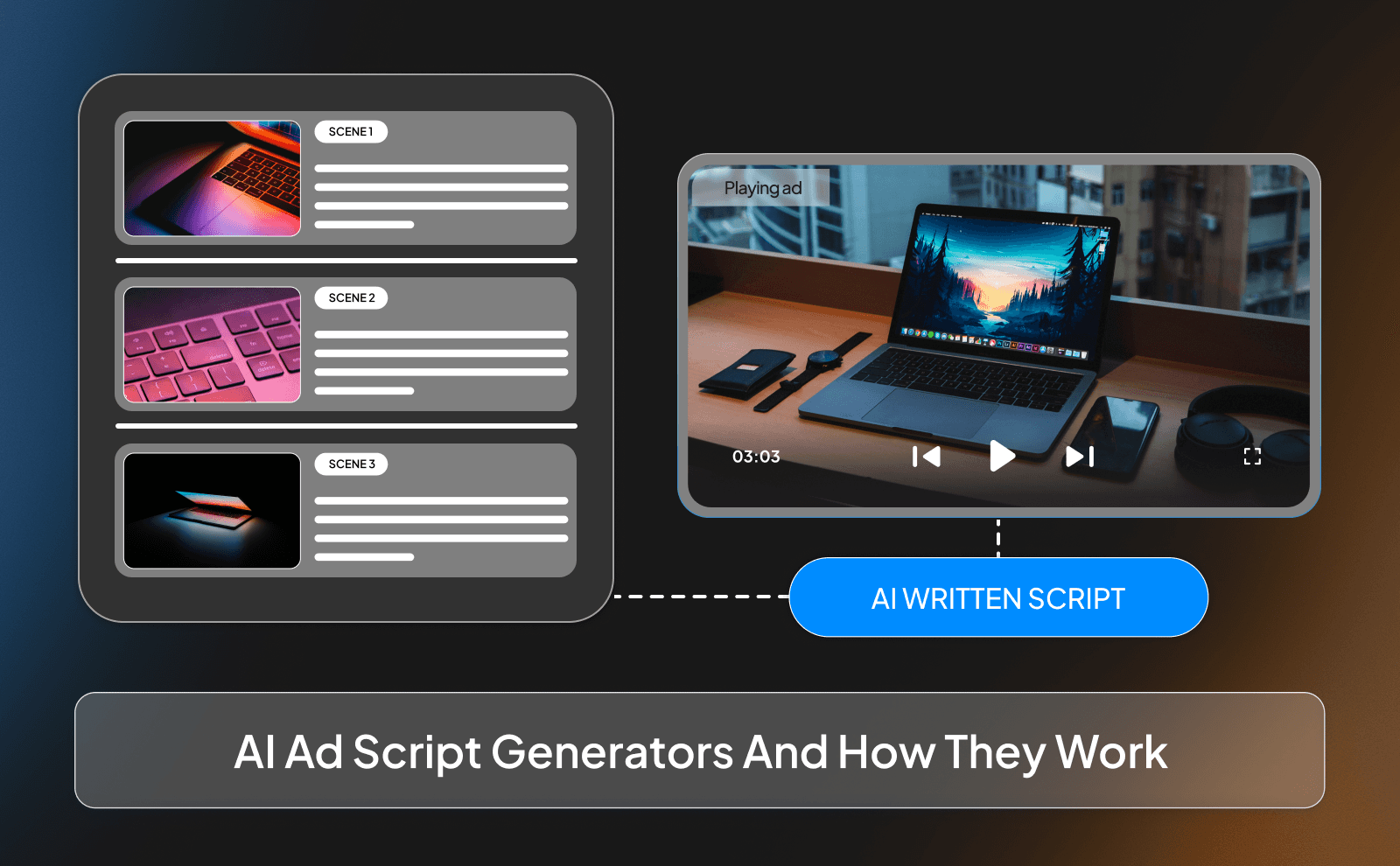
AI ad script generators are tools that help marketers quickly create scripts for ads without starting from scratch. Instead of sitting down and trying to think of the perfect hook or message, you simply give the AI some information. This could be the product you’re selling, the audience you’re targeting, and the goal of the ad. The tool then analyzes that information and generates a script that follows proven marketing patterns.
The real power of these tools is that they allow marketers to move much faster. Instead of writing one script and hoping it works, you can generate several versions using AI script generator and test them. Some scripts might focus on storytelling, others might highlight a problem the customer has, and some might go straight to the benefits of the product.
Natural Language Processing For Ad Copy Generation
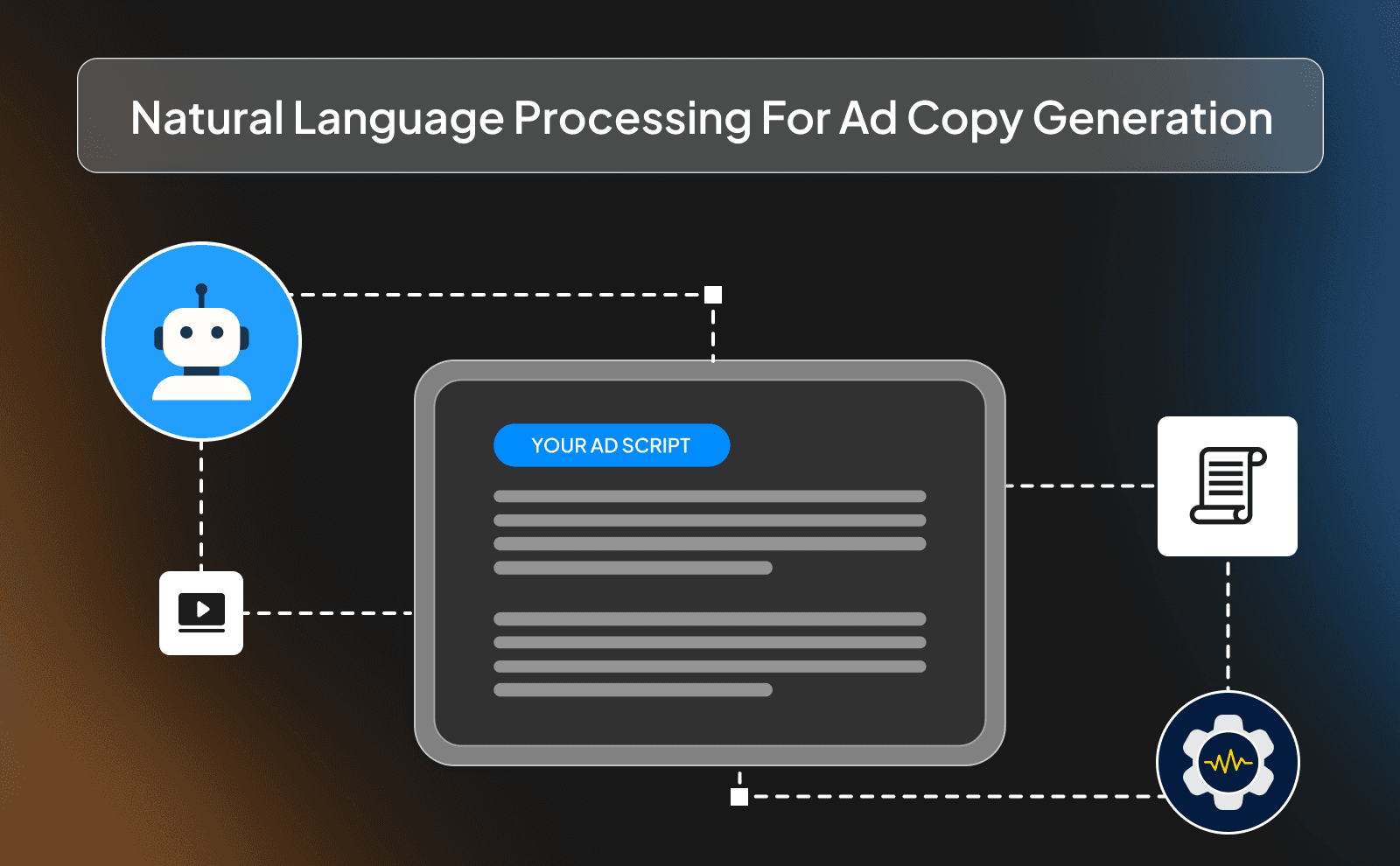
Natural language processing, often called NLP, is the technology that allows AI tools to understand and produce human language. In simple terms, it helps the AI read and analyze how people talk, write, and communicate online. The AI studies thousands of examples of ads, sales pages, and marketing messages so it can learn how successful copy is structured.
Because of this technology, AI can also adjust the tone of the script. For example, it can write in a casual style for social media ads or a more direct style for sales videos. It looks at patterns in language that tend to grab attention, keep viewers watching, and lead them toward taking action. This allows marketers to create scripts that feel natural while still following proven marketing principles.
How AI Learns From High Converting Ads?
AI tools become better at writing scripts by learning from ads that have already performed well. Many of the models used today are trained on large amounts of marketing content, including ads, product descriptions, and sales messages. By studying these examples, the AI learns what patterns often appear in ads that get strong engagement and conversions.
Over time, this allows AI to recognize things like strong hooks, clear problem statements, and persuasive calls to action. When you generate a script, the AI is not guessing randomly. Instead, it uses patterns it has seen in successful ads and applies them to your product or service. This makes the scripts more likely to follow structures that have already proven to work in real marketing campaigns.
Foundation Of High Converting AI Video Ad Scripts
A high converting video ad script usually follows a clear structure that guides the viewer from curiosity to action. The script needs to capture attention quickly, explain a problem the viewer relates to, and then show how the product solves that problem. AI can help build this structure quickly by generating scripts that follow proven marketing frameworks.
However, the best results come when AI is used as a starting point rather than a final product. Marketers still review the script, change the tone, and make sure it matches their brand voice. When AI and human editing work together, it becomes much easier to create scripts that feel natural while still being persuasive and focused on driving conversions.
Creating A Context Vault For Consistent Brand Voice
A context vault is simply a collection of information that helps AI understand your brand. This can include details about your product, your target audience, your brand tone, and the type of messaging you want to use. By giving AI this information before generating scripts, you help it produce content that stays consistent with your brand.
This approach is especially helpful for businesses creating a large number of ads. Instead of starting from zero every time, the AI already knows how the brand speaks and what type of messaging works best. This keeps the tone consistent across different campaigns and helps maintain a recognizable voice in all the advertising content.
Uploading Customer Feedback And Pain Points
One of the most valuable pieces of information for writing good ad scripts is customer feedback. Reviews, comments, support messages, and survey responses often reveal what customers care about most. They also show the problems people are trying to solve when they look for a product.
When this information is given to AI, it can use those real pain points when generating scripts. This makes the messaging feel more relatable because it reflects the actual concerns and desires of the audience.
Training AI With Your Top-Performing Ad Scripts
Another effective way to improve AI generated scripts is by feeding the system examples of ads that have already worked well. If a business has a few ads that produced strong sales or engagement, those scripts can act as a reference point for the AI. By analyzing them, the tool can better understand the tone, pacing, and structure that performs best for that specific audience.
This allows future scripts to follow similar patterns while still creating new variations. Instead of repeating the same script again and again, the AI generates fresh versions that keep the core elements that made the original ads successful. Over time, this helps marketers build a system that consistently produces strong ad ideas.
How AI Structures Winning Ad Scripts?
Hook, Problem, Solution Framework For Video Sales Letters
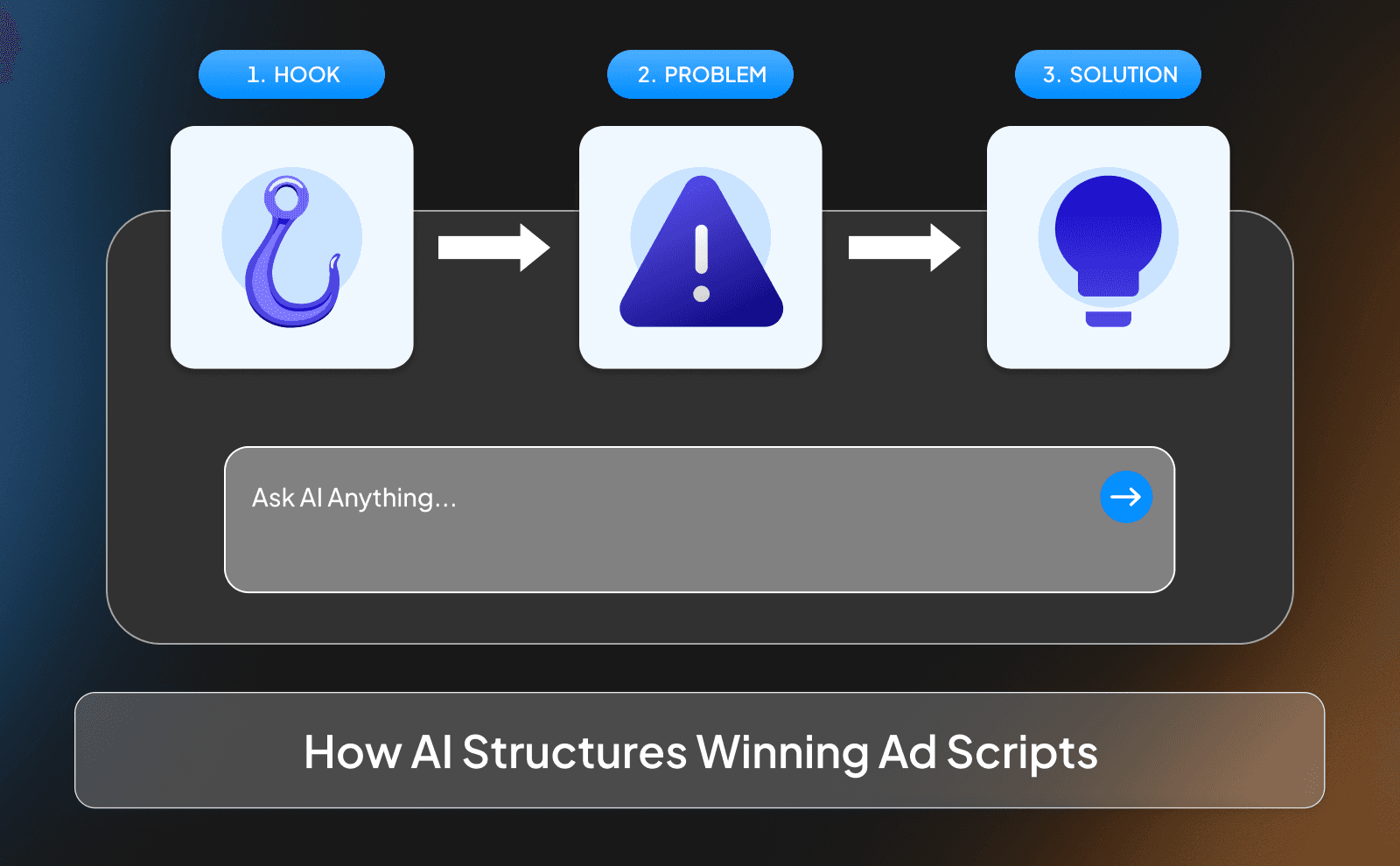
One of the most common frameworks used in video sales letters is the hook, problem, solution structure. The hook is the first line or visual that grabs attention. In the fast world of online content, viewers decide within seconds whether they keep watching or scroll away.
After the hook, the script usually explains a problem the viewer might be dealing with. This helps the audience feel understood and makes them more interested in what comes next. Finally, the solution is introduced, showing how the product or service solves that problem. This simple structure works well because it follows the natural way people think about buying decisions.
The PAS Framework For AI Ad Scripts Explained
The PAS framework stands for problem, agitation, and solution. It begins by clearly describing a problem the viewer might be facing. This could be something frustrating, time consuming, or expensive that the audience wants to fix. By pointing out the problem, the script immediately becomes relevant to the viewer.
Next comes agitation, which means emphasizing why the problem matters. The script highlights the inconvenience, stress, or lost opportunity caused by that issue. Finally, the solution is introduced, showing how the product removes that problem. AI tools often use this framework because it creates a clear emotional journey that leads the viewer toward taking action.
UGC Ad Scripts That Convert In 2026
UGC stands for user generated content, and it has become one of the most powerful styles of advertising. These ads often look like normal people sharing their experience with a product rather than a polished commercial. The goal is to make the ad feel authentic and relatable, which often increases trust with the audience.
AI can help generate UGC style scripts by writing them in a more casual and conversational tone. Instead of sounding like a traditional advertisement, the script may feel like someone telling a friend about a product they discovered. This approach works especially well on platforms like TikTok and Instagram where viewers prefer content that feels natural rather than overly produced.
Best AI Tools For Video Script Writing And Bulk Video Ad Production
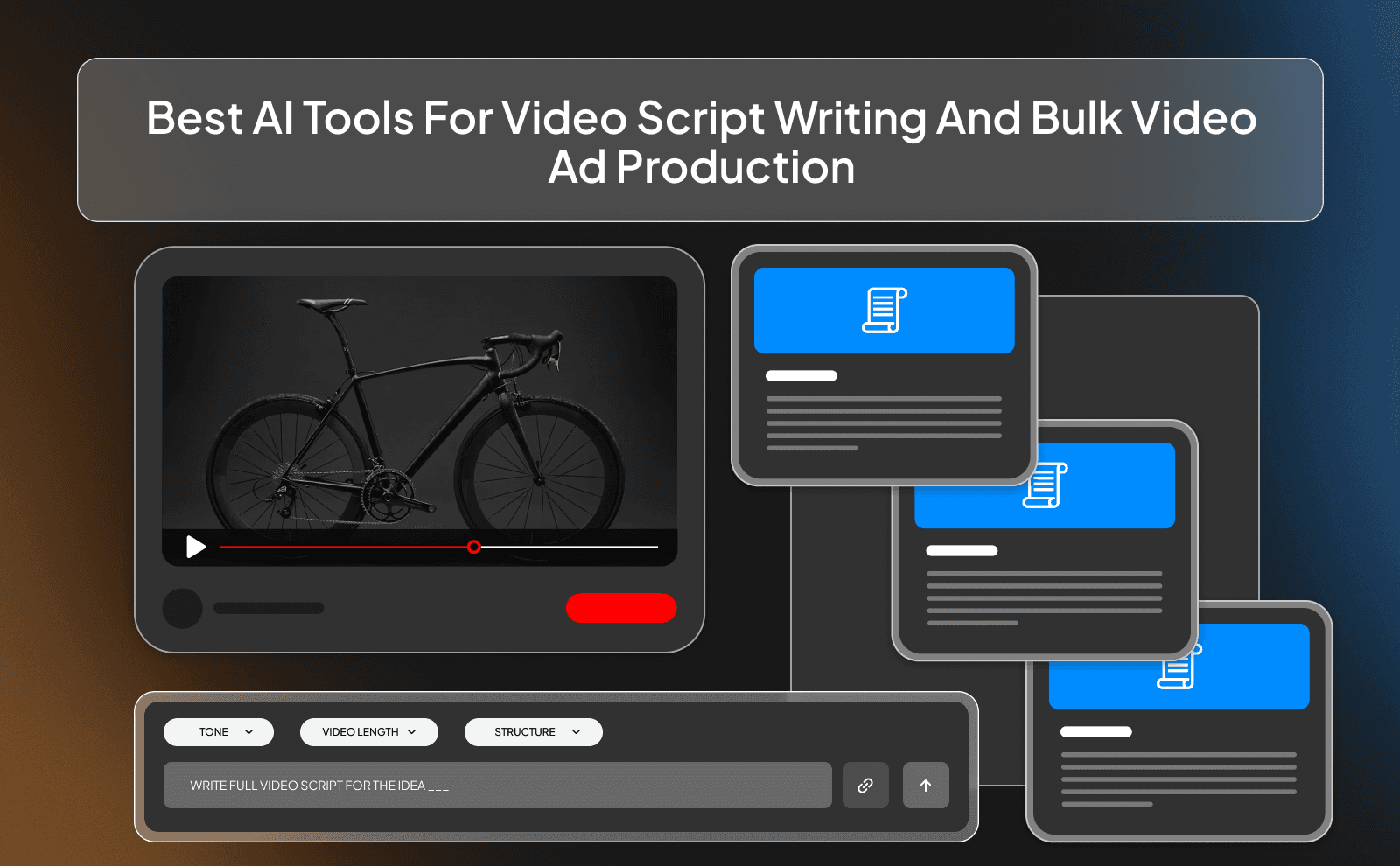
Today there are many AI tools designed to help with script writing and video ad creation. Some focus mainly on generating scripts, while others go further and help turn those scripts into complete videos. These tools can suggest hooks, write the body of the script, and even create variations for testing.
VidRush could be a good tool for the people who not only want to generate a script, but also all the other steps that come with it. The voiceover, the visuals, which are specifically made for YouTube videos. There are also AI tools like ChatGPT and Claude AI which are commonly used for writing Ad copy that converts. Beyond paid advertising, these same principles apply to AI tools for faceless YouTube videos that many creators use for consistent content production.
How To Write High Converting AI Video Ad Scripts Step By Step?
Creating Prompts That Generate Conversion-Focused Scripts
A prompt is the instruction you give the AI before it generates a script. The quality of the prompt has a big impact on the quality of the output. A simple prompt might just mention the product, but a stronger prompt explains the audience, the main problem they face, and the outcome they want.
For example, instead of saying “write an ad script for a fitness product,” a better prompt might describe the type of person who would buy it and the specific benefit it offers. This gives the AI clearer direction and helps it produce a script that speaks directly to the target audience.
Testing Multiple Script Frameworks Automatically
One major advantage of AI is the ability to quickly create many script variations using different frameworks. A marketer might generate one script using the hook problem solution structure, another using the PAS framework, and another based on storytelling. Each one approaches the message from a slightly different angle.
Once these scripts are turned into ads, they can be tested to see which one gets the best response. Some might attract more viewers while others lead to more sales. By testing multiple structures, businesses can identify which style works best for their audience and use that insight for future campaigns.
Optimizing Scripts For Different Platforms And Audiences
Different platforms often require slightly different types of scripts. A short TikTok ad might need a very fast hook and quick message, while a longer YouTube ad might allow more time to explain the product. AI tools can generate scripts tailored to these different formats so the message fits the platform where the ad will appear.
Audience differences also matter. A product aimed at younger audiences might use more casual gen Z language, while another product might require a more direct and informative tone. By tweaking the instructions given to the AI, marketers can create scripts that match both the platform and the audience they are trying to reach.
Create High-Converting AI Video Ads In Minutes: From Script To Launch
Modern AI tools are making it possible to move from script idea to finished ad much faster than before. Instead of writing a script, filming a video, editing it, and adding voiceovers manually, many platforms now automate parts of that process. Once the script is generated, the system can help turn it into a visual ad using templates, AI visuals, and AI voiceovers.
This speed allows businesses to launch campaigns quickly and respond to trends while they are still relevant. Instead of spending weeks producing a single ad, marketers can create multiple ads in a short amount of time and start testing them right away.
Turning AI Generated Scripts For Product Videos Into Finished Ads
Once a script is ready, the next step is turning it into a visual video ad with an AI video generator. This usually involves selecting footage, adding text on screen, and recording a voiceover that follows the script. Many AI tools now help automate parts of this process by suggesting visuals that match each line of the script like VidRush or VEO 3.
The best AI video script generator for faceless videos often includes features that automate both the writing and visual production steps. This makes the production process much faster, especially for businesses that need to create ads regularly. Instead of manually searching for visuals and editing everything together, the system helps assemble the pieces into a finished video that matches the script’s message.
Automated Visual Matching And Video Production
Automated visual matching means the AI selects visuals that fit the message in the script. For example, if the script talks about someone struggling with a problem, the system might suggest clips showing that situation. When the script introduces the product as a solution, the visuals change to highlight the product and its benefits.
This type of automation saves time during video production. Marketers can still review and adjust the visuals if needed, but the AI handles the initial matching process. And this is something you can see used by tools like VidRush which have built-in automations to put clips based on every word said in the script.
Publishing And Testing With Precision
After the ad is finished, the final step is publishing and testing it. Most digital advertising platforms allow marketers to run multiple ads at the same time and measure their performance. Metrics like click rate, watch time, and conversions help determine which ad performs best. Many marketers also use similar approaches when learning how to write YouTube scripts with AI for organic content.
AI Ad script writers can also assist in this stage by organizing different versions of ads and tracking their results. Over time, this data helps marketers understand what type of scripts, hooks, and messages work best for their audience. With each campaign, the process becomes more refined and the chances of creating a winning ad increase.
Advanced Strategies - Pattern Recognition And Performance Optimization
Analyzing Winning Elements In Your Ad Script Generator Outputs
When you generate many scripts with AI, not every script will perform the same way. Some will get more clicks, some will hold attention longer, and some will lead to more sales. The key is to look closely at the scripts that perform best and figure out what they have in common.
Once you identify those winning elements, you can start using them more often. For example, if a certain type of opening line consistently grabs attention, you can include that style in your future prompts. Instead of starting from zero every time, you build on the elements that already work.
Building a Feedback Loop For Continuous Improvement
A feedback loop means constantly learning from the results of your ads and feeding that information back into your process. After running an ad campaign, you look at the results and see what worked and what didn’t. Maybe a certain script had a strong hook but a weak call to action, or maybe viewers dropped off halfway through the video.
You can then use that information to improve the next set of scripts you generate with AI. By updating your prompts and instructions based on real results, the scripts gradually get better over time. This cycle of testing, learning, and improving helps marketers build a system where every campaign teaches them something new about their audience.
Scaling UGC Scripts And Testimonials-Style Ads
User generated content and testimonial-style ads are popular because they feel more real than traditional advertisements. These ads often feature someone sharing their experience with a product in a simple and relatable way. AI can help scale this style of advertising by generating many variations of scripts that follow the same authentic format.
Common Mistakes To Avoid When Using An AI Video Ads Script Tool
Why Generic Prompts Produce Generic Results?
AI tools rely heavily on the instructions they receive. Like most AI content creation tools, the quality of output depends heavily on the quality of input and human refinement. When prompts are too simple, the AI doesn’t have enough information to produce a strong or unique script. For example, asking for “a script for a skincare product” will likely result in something very basic because the tool doesn’t know who the product is for or what makes it special.
Better prompts include details about the audience, the problem the product solves, and the outcome the customer wants. When the AI understands these details, it can create scripts that feel more targeted and relevant. The extra effort put into writing a clear prompt often leads to much stronger ad ideas.
Maintaining Authenticity In AI Written Copy
One concern people sometimes have about AI written scripts is that they might feel too mechanical or unnatural. The best way to avoid this is by editing the script so it sounds like a real person speaking. Removing overly formal phrases and simplifying certain lines can make the message feel more natural and conversational.
Another helpful approach is to include real customer language when guiding the AI. If the script uses words and phrases that customers actually use when talking about the product, the ad will feel more authentic. This combination of AI assistance and human editing helps create scripts that feel genuine while still benefiting from the speed of AI generation.
Measuring Success And Iterating Your AI Script Writing Process
Key Metrics For Video Ad Scripts Performance
Several metrics can help measure how well a video ad script is performing. One important metric is watch time, which shows how long people stay engaged with the video. If viewers stop watching early, it might mean the hook or early part of the script needs improvement.
Another key metric is conversion rate, which shows how many viewers take the desired action after watching the ad. This could be clicking a link, signing up for something, or making a purchase. By tracking these metrics, marketers can better understand which scripts are driving real results.
A/B Testing Frameworks For AI Generated Content
A/B testing is a simple method used to compare two or more versions of an ad to see which performs better. For example, you might run two ads that are almost identical but have different hooks. By comparing their performance, you can see which version captures more attention.
AI makes this process easier because it can generate many script variations quickly. Instead of testing just two versions, marketers can test several different hooks, messages, or structures at once. This increases the chances of finding the version that resonates most with the audience.
Refining Your Brand Voice Over Time
As businesses create more ads, they start to develop a clearer brand voice. This voice reflects the tone, style, and personality used in all their messaging. AI can help maintain this consistency by generating scripts that follow the same tone and structure across multiple campaigns.
Conclusion
AI ad script generators are quickly becoming an important tool for marketers who want to create video ads faster and more efficiently. Instead of spending hours staring at a blank page or struggling with writer’s block, businesses can use AI to generate multiple script ideas in minutes. This allows marketers to focus more on strategy, testing, and improving their campaigns rather than spending most of their time writing the first draft of every ad.
Frequently Asked Questions
What Is An AI Ad Script Generator?
An AI ad script generator is a tool that automatically creates advertising scripts based on the product, audience, and instructions you provide.
How Does AI Write Scripts For Video Sales Letters?
AI analyzes proven marketing patterns and uses frameworks like hook–problem–solution or PAS to generate AI sales video scripts.
Can AI Video Ads Really Convert As Well As Human-Written Ads?
Yes, especially when marketers edit the scripts and test multiple variations to find the versions that perform best.
What’s The Best AI Script Writer For Meta And TikTok Ads?
ChatGPT, Claude AI, and Gemini.
How Long Does It Take To Create High-Converting AI Video Ads?
With the right prompts and tools, you can generate and refine strong ad scripts in just a few minutes.
What Script Frameworks Work Best For AI Generated Ads?
Common frameworks like hook–problem–solution, PAS, and storytelling formats tend to work very well.
How Do I Maintain My Brand Voice With An AI Video Generator?
You maintain consistency by providing brand guidelines, examples of past ads, and clear prompts that describe your tone and style.
What Are UGC Ad Scripts And Why Do They Convert?
UGC scripts are ads written to sound like real customer experiences, which makes them feel more authentic and trustworthy.
Can I Use AI For Bulk Video Ad Production?
Yes, many AI tools allow you to generate multiple scripts and produce large numbers of video ads for testing and scaling campaigns.
How Much Does An AI Ad Script Generator Cost?
Prices vary depending on the tool, some tools have free plans, and they can offer monthly subscriptions from $10 all the way up to $100/mo.
AI ad script generator tools write persuasive video ads fast for better conversions, saving time and boosting ROI for marketers in 2026.